
Welcome to the Philadelphia Piano Institute.
We offer piano lessons for all ages near the corners of 8th and Catherine and 2nd and Bainbridge in Philadelphia and online, and as Philly’s premiere destination for keyboard instruction, we take our mission seriously - to provide children and adults with an enjoyable, fundamentally sound education that will give them a lifetime of music-making. Our curriculum and teaching methods are always age-appropriate, and they include reading, ear training, music theory, and technique; you will improve in whatever genre or practical application you wish to pursue.

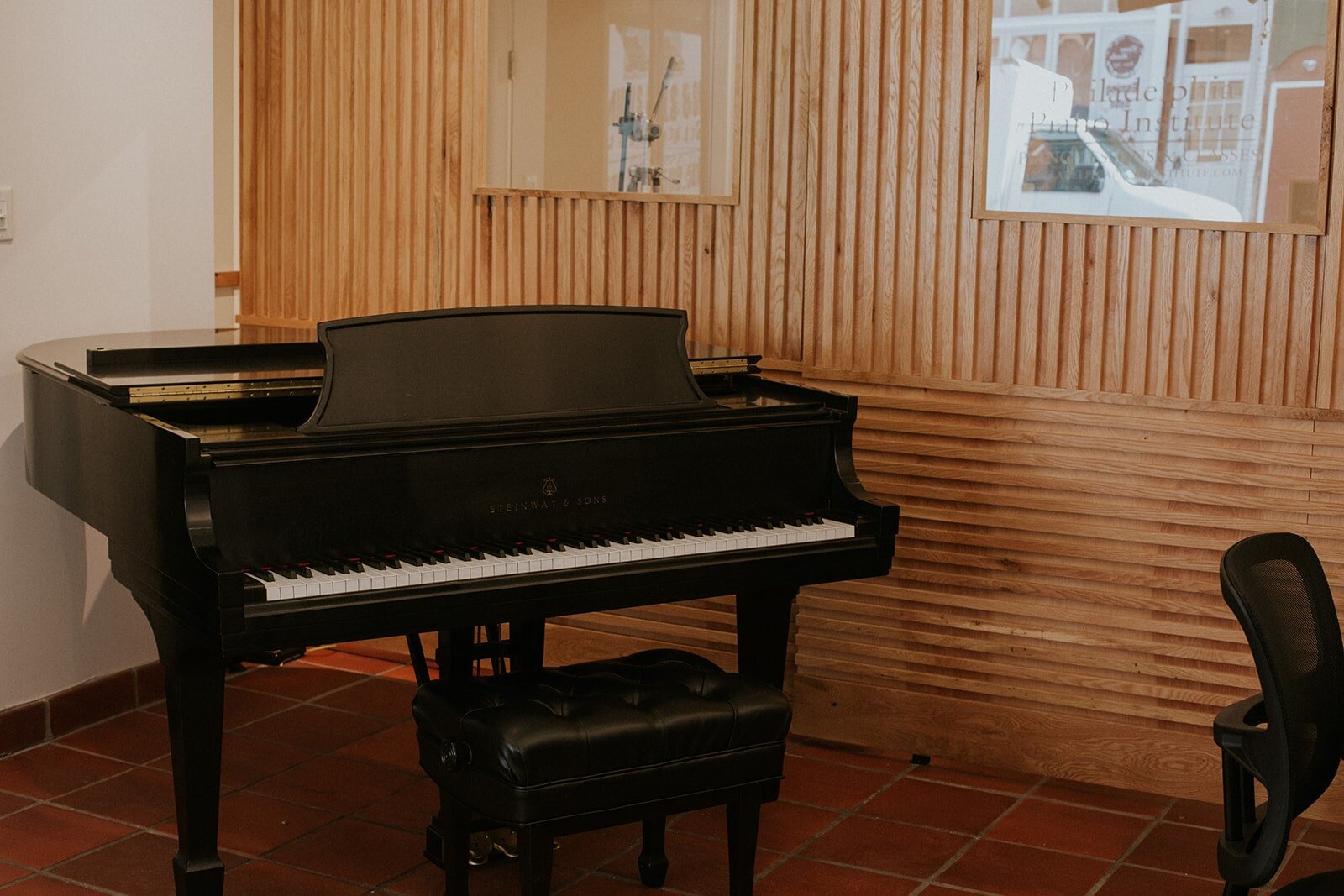
Studio A at our Queen Village location
Our Piano Teaching Philosophy and Style
Pursuing Your Goals and Independence
We strongly believe in working on a case-by-case basis with each student to achieve his or her goals at the piano or with music in general. We don’t have an agenda, and we want to help you enrich your life through music. Furthermore, we want to help you become an independent pianist who can pick up a piece of music, read it, troubleshoot it intelligently, and learn it on your own.
Comprehensive Music Education
If you want to give your child a comprehensive, fundamentally sound piano education, please get in touch. If you are a young professional or retired adult who wants to learn the basics or a set of your favorite songs, we’d love to work with you too. We also enjoy working with high schoolers or advanced pianists on audition or college acceptance preparation - in short, we have the knowledge and experience to help you achieve any goal at the piano.
Work With Philly’s Best Piano Teachers
We believe that while curriculums and methods matter, the skill of your teacher matters most. The instructors here at the Institute are truly the finest in the city, and you will work 1-on-1 with a caring, deeply experienced, and professional pianist. Our instructors have advanced degrees in music, play at a professional level, and many have led storied music careers performing with leading singers, chamber musicians, and more. That said, each teacher at the Institute has significant experience working with beginners and advanced musicians alike, and they enjoy helping each and every student.
A Sample of What You’ll Learn in Lessons
The Fundamentals of Music
The fundamental aspects of our lessons include, but are not limited to:
Your music - spend dedicated time working on your piano repertoire or music of choice
Proper technique - we encourage a lifetime of healthy, tension-free, and painless piano playing
Reading skills - so you can sight read effectively and learn music on your own
Ear training - so you can learn to play your favorite tunes by ear
Music theory - so you can analyze music, understand it, play by ear better, read off lead sheets, and compose or write songs
Genres - What Music Will You Play?
Generally speaking, we are happy to help you pursue any genre that interests you: jazz, pop, rock, classical, Broadway and Great American Songbook repertoire, and more. That said, we do believe that “classical” music training is the most holistic approach to improving your overall musicianship, and in most cases, we will focus on classical repertoire and playing techniques. We can take this knowledge and technique and apply it to any popular genre you wish to pursue.
If you're interested in private music lessons with one of our instructors at our studio, in your home, online, or if you’d like to hire a musician for event entertainment, please call (267) 428-2492 or send an email.
Performance Opportunities For Our Students
Performance is a skill that requires development, so we encourage all my students to play for a live audience regularly. Each spring, we hold a studio recital, where all of our students prepare repertoire to perform for each other, friends, and family. The spring recital is probably the most public audience for which students will play. We also encourage students to put on their own recitals, where they invite only as many people as they want. Recitals are not meant to be pressure-filled, but rather should be opportunities to be expressive and play your art.
Our Studio Locations in Philadelphia
Our Two Locations
Whether you’re coming from Center City, Fishtown, Rittenhouse, South Philly, Old City, or right here in Queen Village, you or your child are always welcome in our studio. There’s plenty of free or metered parking nearby, and if you are bringing a child to piano lessons, you can relax, use the wifi, or observe your child’s lesson. We teach children, high schoolers, and adults, and we are happy to work with beginner, intermediate, and advanced students. Our two studios:
621 S 2nd Street, Philadelphia, PA 19147 (Queen Village)
807 S 8th Street, Philadelphia, PA 19147 (Bella Vista)
Studio Setup
Our studio has lots of natural light, video and audio recording equipment from Zoom, and a Steinway baby grand piano. If you think it would help you learn better, I'm happy to record your lessons and send you a file. Additionally, we always recommend listening to yourself when preparing a piece; we will record you when we're closing in on a performance so we can fine-tune the music even more. We’ve also made our space as comfortable for waiting parents as possible, so if your child is taking lessons, please help yourself to the internet and coffee!
What Ages Do We Teach?
Piano Lessons for Kids
We’ve been teaching piano lessons to children since 2011, so if your child is capable of sitting through a 30 minute long lesson and following instructions, we are happy to teach them. We always request that we do a short consultation before agreeing to lessons for young children (ages 4-6) - it’s important to make sure parents and teachers are on the same page regarding a child’s readiness for lessons.
Middle School & High School Lessons
Is your middle schooler or high schooler interested in lessons? We’d love to work with them. Whether they’re just starting out in music or looking to further their musical education, we can help them prepare for college auditions, high school competitions, and scholarships. We are also more than happy to support their other musical interests, whether they be musical theater, jazz band, or anything else.
Piano Lessons for Adults in Philadelphia
Adults bring a unique set of goals to piano lessons, and we always love helping my more mature students grow their appreciation for music. We can help you master your favorite pieces or learn the fundamentals.; we’ll set up a unique lesson structure just for you. Do you want to use the piano to decompress, or do you want to play your favorite Billy Joel tune at your next party? Get in touch, and let’s pursue your goals together.
Lessons in Our Studios, Online, or in Your Home
Lessons In Queen Village and Bella Vista, Philadelphia
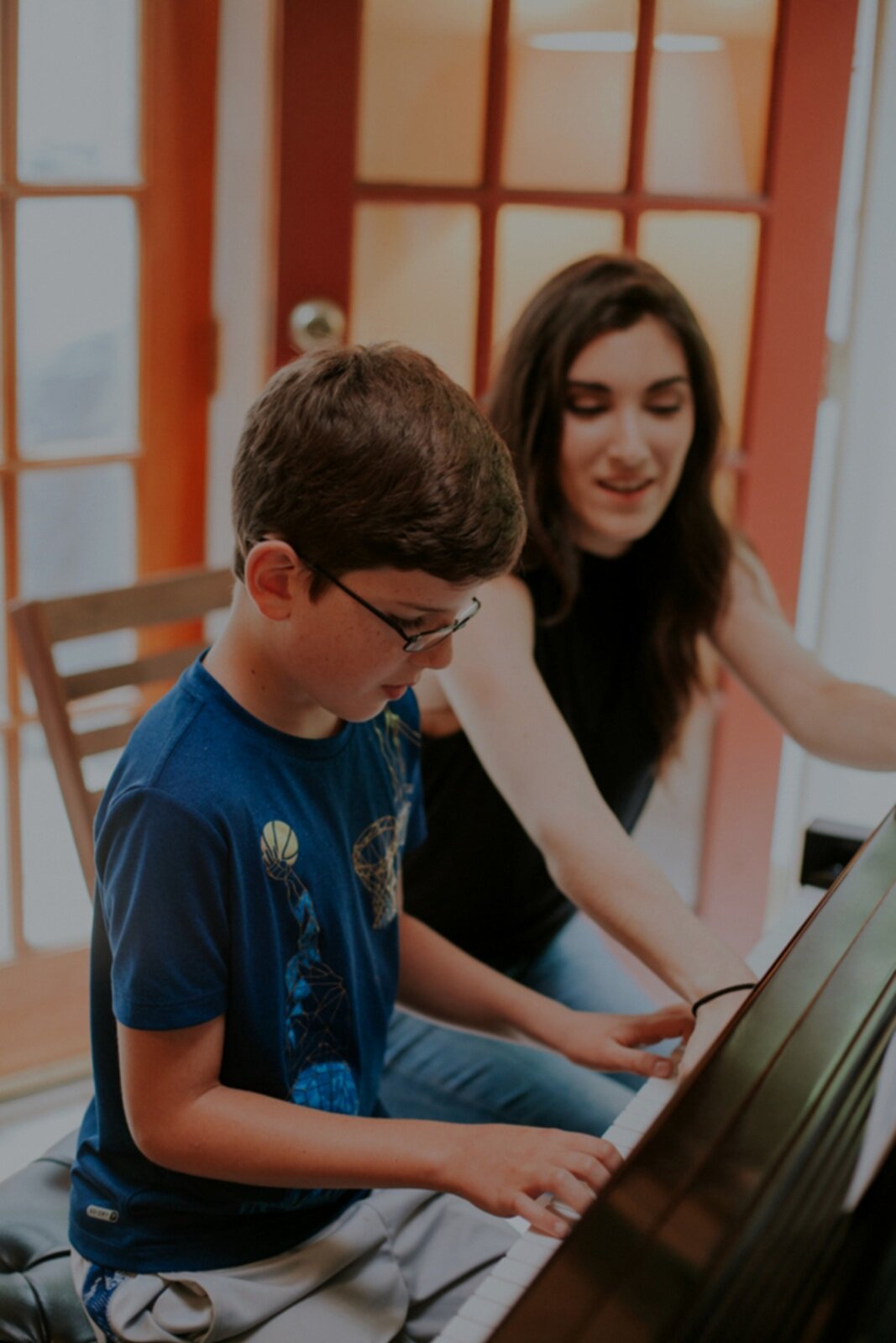
Choose from 30, 45, or 60 minute time slots on a Steinway, Baldwin, or Kawai baby grand piano. Lessons occur once per week all year round. Experience a well-rounded approach to repertoire, genres, technique, reading and ear training; the goal is to make you a complete, independent musician. We are also open to "partner lessons," in which two young students (similar in skill level) take a combined piano lesson.

Lessons Online via Skype
If you have a fast internet connection and access to a webcam, you can sign up for live online piano lessons. Traveling isn't possible for everyone; if in-home lessons aren't an option, we can accomplish just as much online via Skype. We use Zoom technology for recording and teaching online, so sound and/or video quality won't be an issue. If you're interested in online lessons, get in touch so we can set up a time to test your connection and video quality.
Lessons in Your Home
If you live within a reasonable distance, we can travel to you and offer in-home piano lessons. This option works especially well for home school students, co-ops, and those unable to travel. We can travel to any Philadelphia neighborhood; the additional travel fee will be assessed once we figure out the time and cost of travel and parking. This lesson option is available to students of high school age and below.
Our Philadelphia Piano Lesson Cost & Enrollment Info
Payment Information
We try to be as flexible for our students as possible, and to that end, we accept payment for lessons on the following schedules:
Weekly (pay-as-you-go) (requires a registration fee)
Monthly
Quarterly (receives a discount)
Every Six Months (receives a discount)
About the Founders
Erika Gingery, director of education and co-founder of the Institute, is a classically trained pianist and teacher. She is a former faculty member at Settlement Music School in Queen Village, and she also taught at the Germantown and Wynnewood branches of Settlement in addition to Music Training Center in Ardmore, PA. She studied piano for 19 years, studied voice for 6 years, and graduated with a master’s degree in piano pedagogy from Texas Christian University under international performing artist Harold Martina and pedagogue Dr. Ann Gipson. She’s enjoyed teaching private lessons and group classes to children, high schoolers, and adults, and as a result, she believes the piano can enrich anyone's life, from elementary school students to busy professionals.
Adam Gingery, co-founder and director of growth, is also a pianist, brass musician, and singer. He studied piano pedagogy and orchestral instrument performance during his undergraduate years before pursing a Masters degree in music at TCU. He has worked extensively as a collaborative pianist, performed with the Fort Worth Symphony Orchestra as a vocalist, and won or placed in numerous brass competitions.